Under this ongoing initiative, the Institute undertakes research on barriers faced by women, persons with disabilities(including individuals who are deaf, visually impaired, or mobility challenged), minorities, and other vulnerable communities in accessing courts. It conducts legal empowerment and awareness campaigns in collaboration with civil society organisations and universities, while organising capacity-building workshops for legal professionals on diversity, ethics, and equitable justice delivery. The initiative also fosters stakeholder networking among courts, academia, and NGOs to strengthen inclusive governance and promote a more accessible, fair, and accountable judiciary.
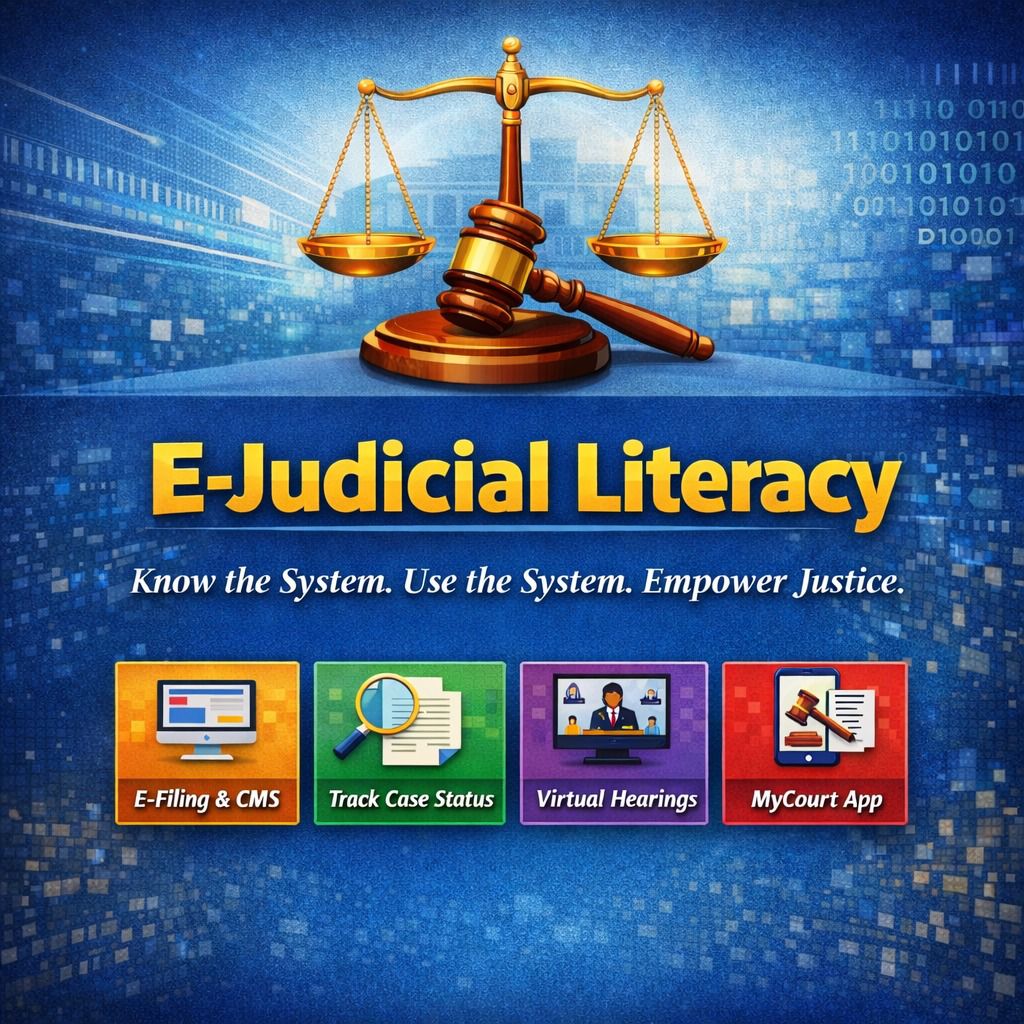
Our ongoing E-Judicial Literacy project is based on prior research into the traditional lengthiness of outdated legal procedures and the challenges faced by the public, as well as comparative studies to identify faster remedies. The project aims to improve public understanding of digital justice processes and promote informed participation in technology-driven judicial systems. As courts increasingly adopt digital tools such as virtual hearings and automated record systems, enhancing citizen awareness and professional skills becomes essential. Our campaign primarily focuses on digital literacy workshops on online case filing, tracking, and accessing judgments, the development of simplified guides and multimedia resources explaining e-court procedures, and awareness campaigns on digital rights and ethical use of legal technologies
This initiative is dedicated to empowering individuals and communities with knowledge of their legal rights and practical pathways to remedies. It includes community legal awareness campaigns and rights education programs, the establishment of legal information desks or digital resource hubs, and research and storytelling initiatives that document justice barriers and community experiences.
Lawtech challenges, especially in an outdated judicial system, are hard to overcome without the youth who technologically lead and innovate. An outdated judiciary cannot meet modern legal demands without meaningful digital reform. Youth, equipped with strong technological skills and creative thinking, can play a transformative role in modernizing court administration. The Youth Judicial Engagement Corps (YJEC) aims to integrate law and technology students into the judicial system to accelerate the transition toward a sustainable, transparent, and efficient e-judiciary.
Under this initiative, designated courts will engage part-time Youth Legal Associates, primarily law and IT students, to support digital case management. They will assist in maintaining electronic records, updating case statuses, supporting e-filing systems, and ensuring systematic digital tracking of cases—enhancing efficiency without replacing court officials.
Selected participants will receive structured training on e-filing, digital case management systems, e-hearing platforms, cybersecurity, data privacy, and ethical data handling. This ensures professional competence and accountability in managing court digital systems.
YJEC will host E-Justice Hackathons and LawTech Challenges, encouraging youth to develop practical digital solutions that improve access to justice, streamline court processes, and promote transparency.
The program may collaborate with judicial training institutes, universities, and technology companies to provide mentorship, advanced technical training, and strong cybersecurity standards to support sustainable digital judicial reform.
YJEC will help courts work more efficiently by improving digital record-keeping and making case management more transparent and organized. At the same time, it creates meaningful opportunities for young people to contribute to the justice system, building a more responsive and future-ready judiciary together.
by
Md. Tanvir Mahtab and Sadia Shultana
by
Sameera Khan
by
Mir Fahmida Sultana
by
Shafqat Aziz
by
Md. Kibria Nur
by
Arnold Drong
by
Surja Mandal
by
Adnan Sazid
Bangladesh Institute for Judicial Advancement (BIJA) is a non-governmental, independent research and development institute dedicated to strengthening judicial systems and advancing equitable access to justice in Bangladesh. The organisation works in alignment with Sustainable Development Goal 16, promoting peaceful, just, and inclusive societies through research, advocacy, and policy-oriented initiatives aimed at improving justice delivery and institutional effectiveness.
The mission of BIJA is to strengthen judicial systems and enhance access to justice in support of SDG 16, by promoting peaceful, inclusive, and accountable judicial institutions. We aim to:
To build a modern, transparent, efficient, and inclusive judiciary where access to justice is universal, judicial decisions are informed by research and innovation, and every citizen can exercise their legal rights with confidence and dignity.